Take the shed apart. Leave the plan intact.
Shed removal in Albuquerque starts with the structure, its base, and the full path to the truck. Share the material, size, condition, contents, utilities, anchors, and access before the work is set.
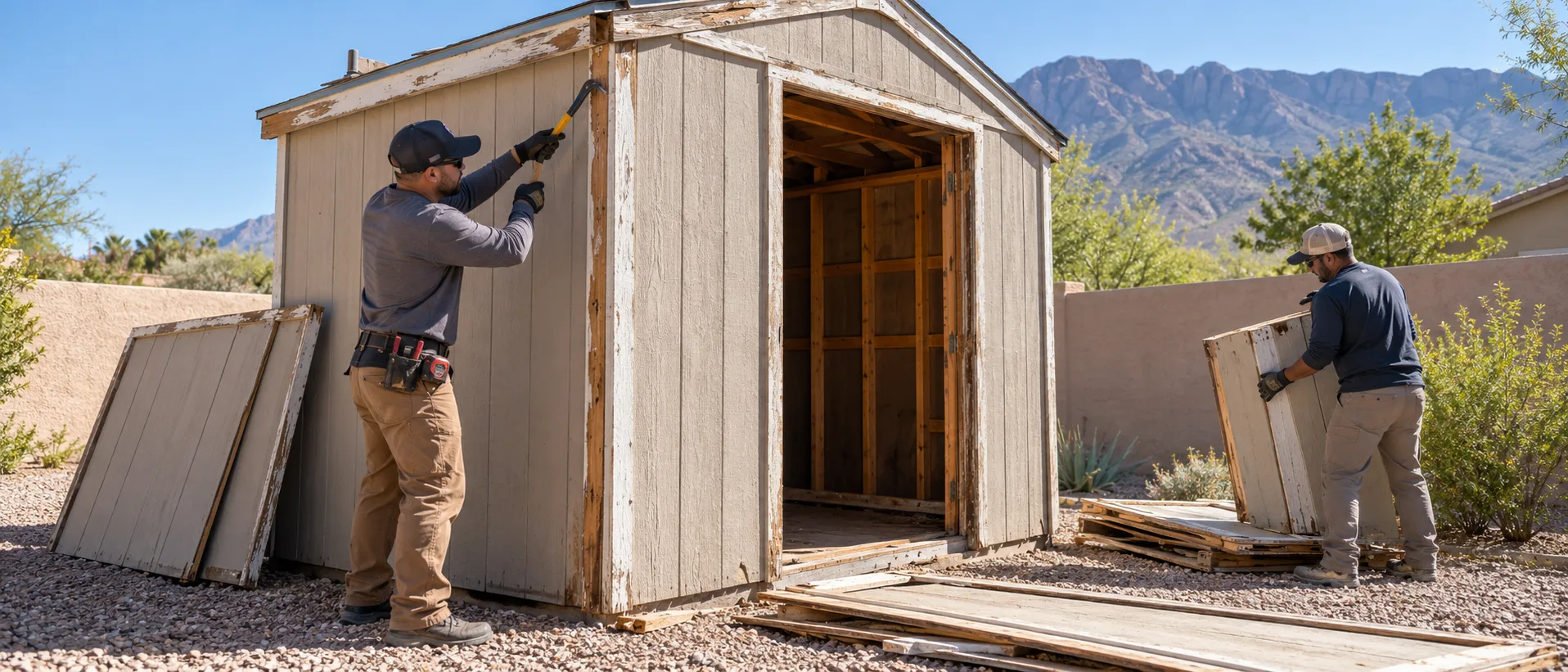
One shed. Seven ways the job changes.
Choose the page that best matches the material, setting, or stage of work. The main removal page owns the complete scope.

Shed Removal
Plan the structure, contents, base, access route, and haul-away as one scope.
→
Shed Demolition
Controlled dismantling for sheds that cannot be lifted or hauled intact.
→
Shed Hauling
Loading and transport planning for separated shed panels and ordinary debris.
→Storage Shed Removal
Coordinate contents, shelving, structure, anchors, and the base before removal.
→
Backyard Shed Removal
Plan narrow gates, side yards, landscaping, surfaces, and the route to the truck.
→Wood Shed Removal
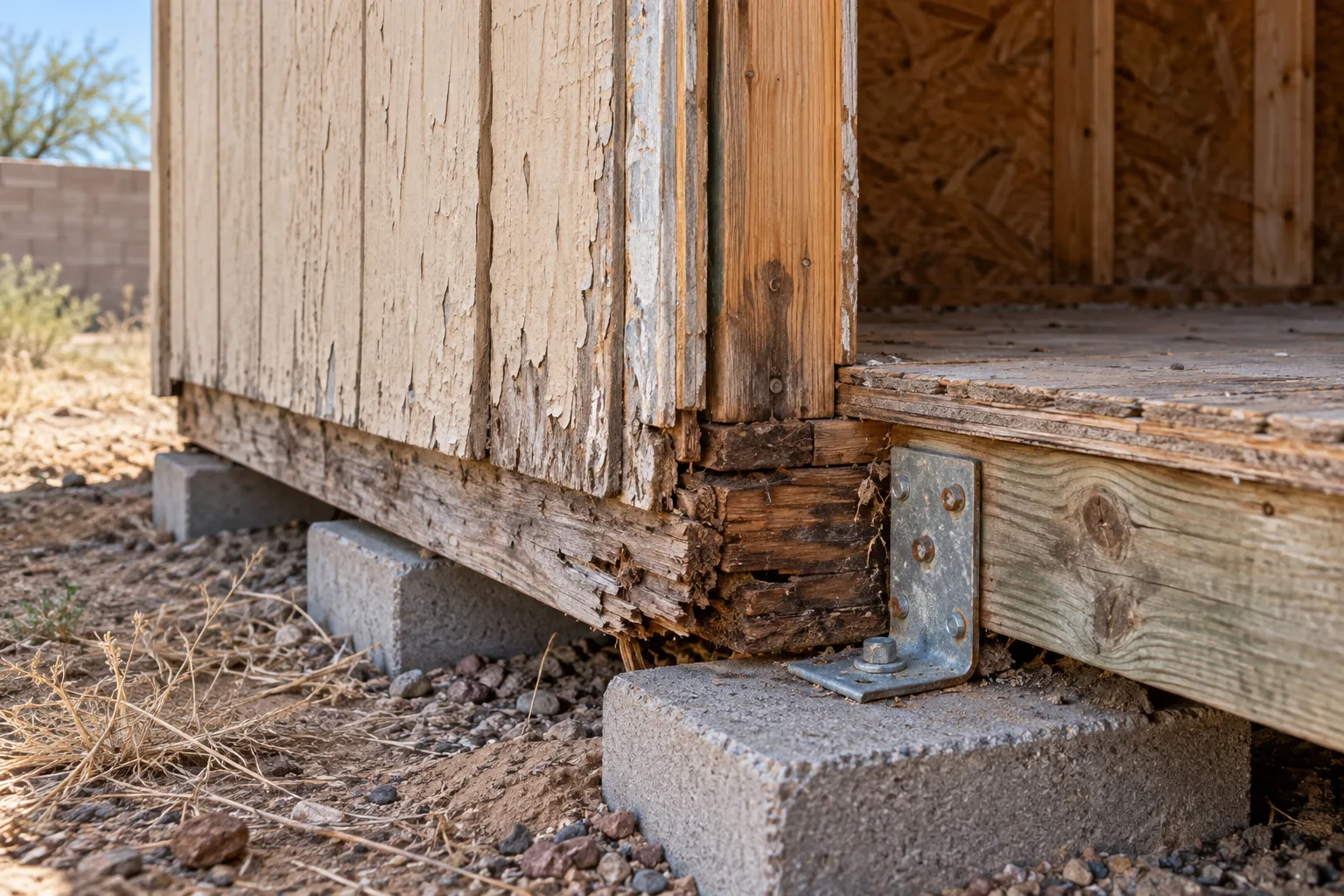
Account for framing, sheathing, roofing, rot, fasteners, and the floor system.
→Metal Shed Removal
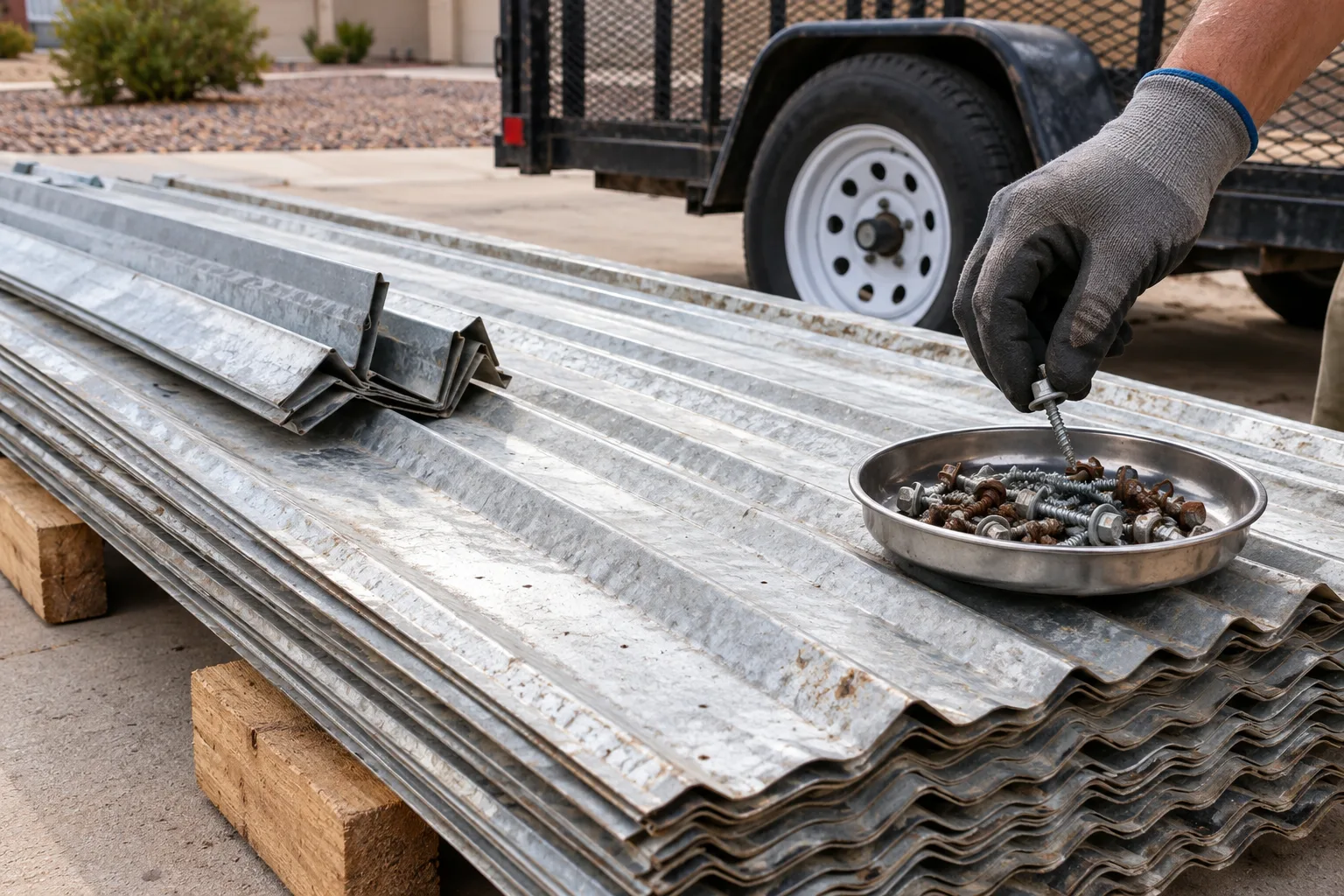
Manage corrugated panels, frame connections, sharp edges, anchors, and fasteners.
→The useful estimate starts before the first tool.
A footprint alone does not show the roof layers, weak framing, anchors, hidden contents, narrow access, or concrete below.
Measure
Width, depth, wall height, roof peak, gate, and tightest turn.
Identify
Wood, metal, resin, mixed materials, roof, floor, and base.
Disclose
Utilities, instability, old material, chemicals, pests, and attachments.
Route
Side yard, gates, slope, surfaces, parking, and truck position.
A controlled sequence from structure to load.
The exact steps depend on condition and approved scope. The useful order stays consistent.
Structure and hazards
Review the frame, roof, base, utilities, contents, and material concerns.
Layers that leave
Confirm the shed, floor, anchors, blocks, slab, and site finish separately.
Access and staging
Protect a workable route and identify where materials can be stacked.
Secure the load
Contain fasteners and ordinary debris included in the approved scope.
Material changes the dismantling plan.
Wood can hide rot, layered roofing, and heavy sheathing. Metal panels flex, catch wind, and expose sharp edges. Resin sheds may use interlocking parts and concealed anchors. Mixed structures need each layer identified.
Condition
Leaning, fire damage, collapse, corrosion, or soft framing may require a different assessment.
Base
Skids, blocks, pavers, anchors, wood floors, and concrete are separate scope decisions.
Unknown material
Do not disturb old or suspect material to identify it. Qualified assessment may be needed.
Nearby does not mean confirmed.
These communities are close to Albuquerque. Call with the exact address so coverage, jurisdiction, road access, and travel can be checked together.
Questions worth answering before removal day.
Clear answers prevent the structure, base, and final site condition from becoming three different assumptions.
Does the shed need to be empty?
Separate everything you are keeping. If ordinary contents should be considered for hauling, list and photograph them. Chemicals, fuel, cylinders, batteries, and other regulated items need another conversation.
Is the slab included?
Not automatically. The shed, floor, anchors, blocks, footings, slab, grading, and landscaping are separate scope items.
Can a shed with electricity be removed?
Active or uncertain utilities must be identified and properly controlled before structural removal. Do not disconnect unknown lines as a preparation step.
Can an old shed be moved instead?
Relocation is a specialty service. Condition, base, access, destination, equipment, and road transport determine whether an intact move is practical.
What photos help most?
Photograph all four sides, the roof from the ground, the interior when safe, the base, the narrowest route point, and the final loading area.
Start with the shed and the route.
Call with the shed size, material, base, contents, access, and service address.