Wood vs. Metal Shed Removal: What Changes in the Plan?
Wood and metal sheds create different handling problems, but both require a stable sequence, a clear route, and an agreed end condition.
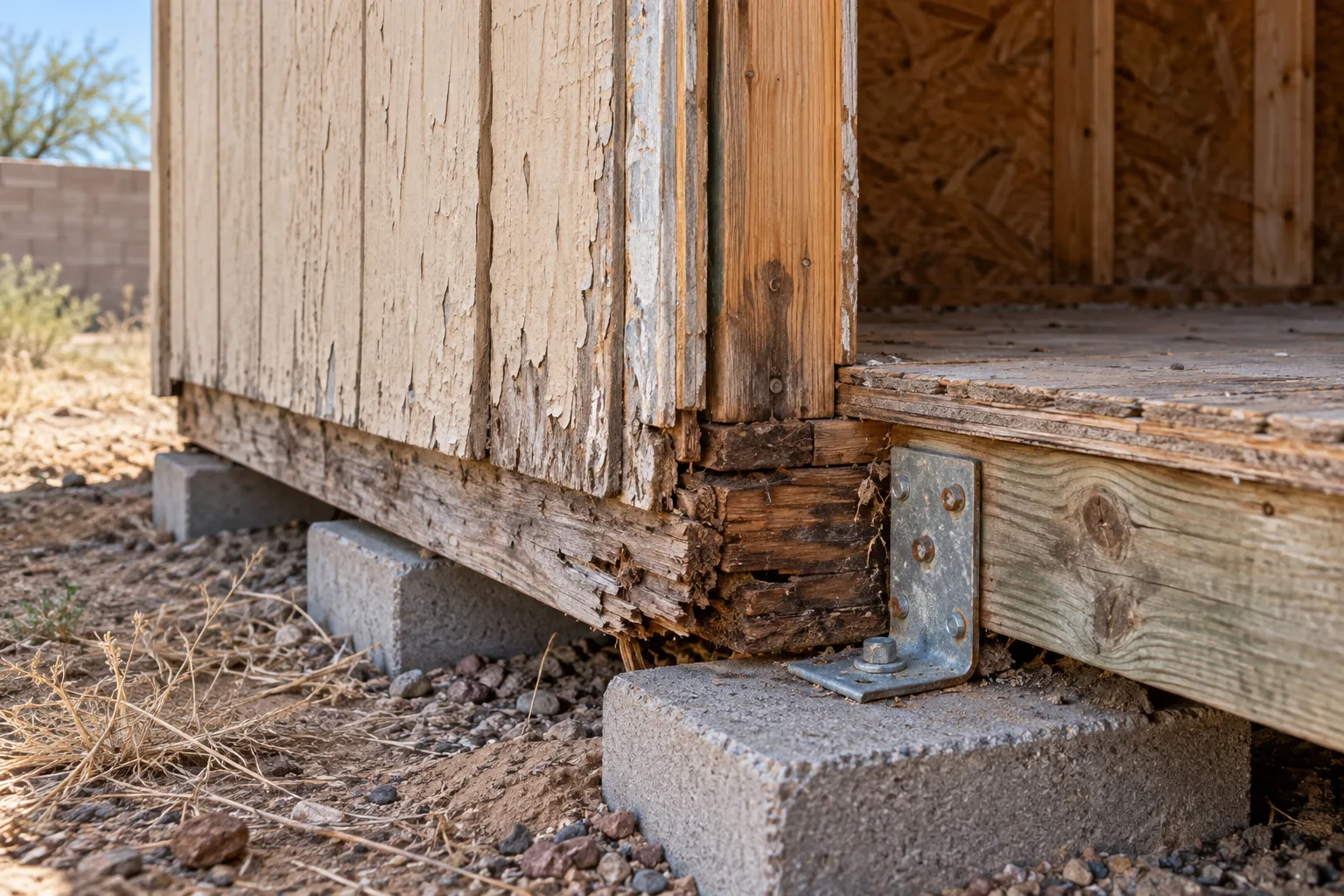
A wood shed is usually a layered assembly of roofing, sheathing, framing, siding, floor, and anchors. A metal shed often relies on many small fasteners connecting flexible panels to a light frame. The footprint may be similar while the dismantling sequence, debris shape, and handling risks differ.
Material comparison
| Question | Wood shed | Metal shed |
|---|---|---|
| Condition clue | Rot, insect damage, soft sheathing, sagging floor | Corrosion, loose fasteners, bent frame, torn panel edges |
| Typical pieces | Studs, siding, sheathing, roofing, floor sections | Corrugated panels, channels, braces, screws, anchors |
| Handling concern | Hidden weakness and layered weight | Flexible panels and sharp exposed edges |
| Route concern | Bulky framed sections | Long panels affected by turns and wind |
Roof and base still matter
Do not describe a shed only as “wood” or “metal.” Note asphalt shingles, rolled roofing, composite panels, wood flooring, skids, blocks, anchors, and concrete. Mixed assemblies affect volume and may require different disposal paths.
Unknown old material changes the conversation
EPA says visual inspection alone cannot confirm whether a building material contains asbestos. If old siding, roofing, flooring, insulation, or other material may be disturbed, disclose the concern and seek qualified assessment rather than sampling it yourself. Read the EPA’s home remodeling and asbestos guidance.
Send these details for either material
- Approximate dimensions and roof type
- Visible damage and whether the shed is leaning
- Floor, base, anchors, and slab information
- Utility connections
- Gate width, turns, slope, and loading point
Connect the guide to the service.
Review wood shed removal in Albuquerque, then prepare the details that shape an estimate.